




A Century-Old History of the Secession Insurance Villa in Hlohovec
The story of the Art Nouveau villa on today's Nádražná Street began in 1921. Over more than a century, it served as a health insurance office, Gestapo headquarters, maternity ward, and police station. It survived war, bombing, and decline. Today, it is being brought back to life.
Jozef Urminský
When I was little, my father used to tell me there was a house in Hlohovec where storks landed with bundles of little children. In a curious little boy raised on fairy tales, who believed everything his father said, an understandable desire to see it grew with each passing day. I imagined it as a bird's nest, but reality was different. The house was truly imposing, and even though I searched in vain for a stork heliport, the entrance staircase with its massive columns and the turret remained etched in my memory. I satisfied my child's head with my own explanation that perhaps through the open window of the tower, storks used to fly inside.
If we set aside childhood fantasy and look more closely at this building, we begin to perceive it differently — especially from an architectural perspective. It belongs among the little-known and unjustly overlooked buildings of the city. It was built during the waning period of Art Nouveau in 1921, but perhaps because it bore fewer typical features of this architectural style, professionals never gave it the attention it deserved. It is, however, the largest Art Nouveau villa in the city built in the first half of the 20th century.
It is in some ways a rather mysterious building, especially regarding the origins of its creation and the name of its designer. This literally eluded researchers until June 2025, when during a complete reconstruction, a small, half-decayed note written by a certain Štefan Moravčík was discovered in a sealed niche on the first floor, containing a brief pencil message in Hungarian: 'Dear Mr. Bachner, please have me sign the invoice for the Skřivánek house. Respectfully, Štefan Moravčík. July 22, 1921.'
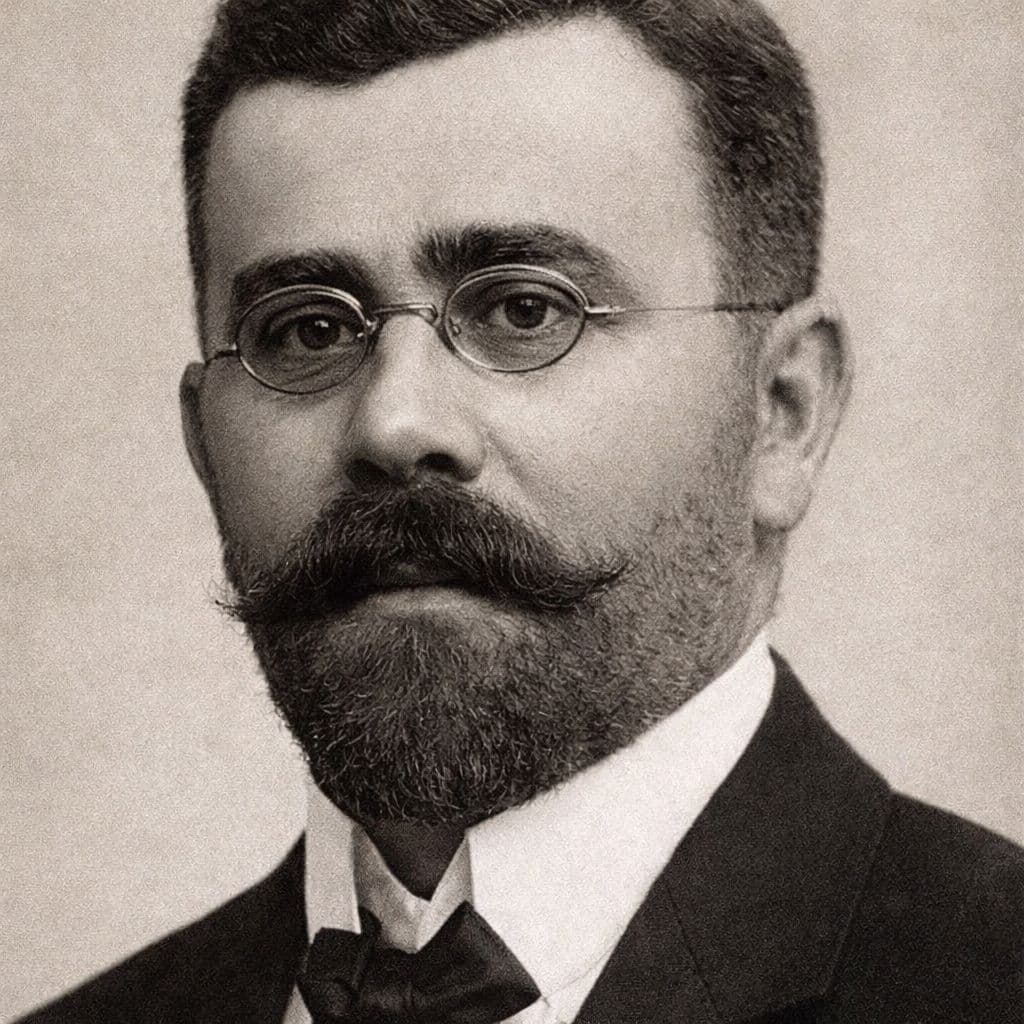
This inconspicuous and perhaps entirely insignificant message found during the building's reconstruction, donated to a museum by the current owner Simona Kubištová, revealed the name of the builder and possibly the designer. That man, according to the small note, was none other than Josef Skřivánek from Čáslav (1868–1934), from the renowned Skřivánek builder family. His cousin was another prominent architect, Professor Ladislav Skřivánek, designer of the former town school, today the Grammar School in Piešťany. As we learn from period sources.
Josef Skřivánek was, like his cousin, an extraordinarily talented builder and designer, and on top of all that, a capable manager and influential man. From 1910, he began serving as a juror for architectural competitions for public buildings in Bohemia. He held such authority in professional circles that he subsequently won most of these commissions as the execution designer. After the founding of Czechoslovakia in 1918, he expanded his activities to Slovakia as well, although his work here is relatively unknown. In his native Čáslav, he was behind the construction of many public buildings, whether as builder or designer. These included the Čáslav synagogue, facades of several commercial buildings, the Evangelical teacher's institute, the post office, the Sokol hall, the Jan Ladislav Dusík Theatre, and among his building projects was also — and this is important for our story — one building: the local District Health Insurance Fund office.
And this is precisely the name the Hlohovec villa bore, since it was primarily built as a purpose-built structure for the District Health Insurance Fund insuring workers. Today we would call it a health insurance company. This office was established in Czechoslovakia in 1920 for industrial workers as insurance for accident and pension coverage.
It was therefore a rather important public building. In Hlohovec, this insurance company began its operations in the newly built building on what was then Nádražná Street after approval in the summer of 1921. Skřivánek's inventiveness in executing this project drew not only from Art Nouveau elements, but he often incorporated elements of historicism and old rural architecture into his designs. Interestingly, none of his designed villas employed a staircase hall, and he often placed staircases in Baroque-inspired corner turrets integrated into the building's mass. And so it was with the Hlohovec villa as well.
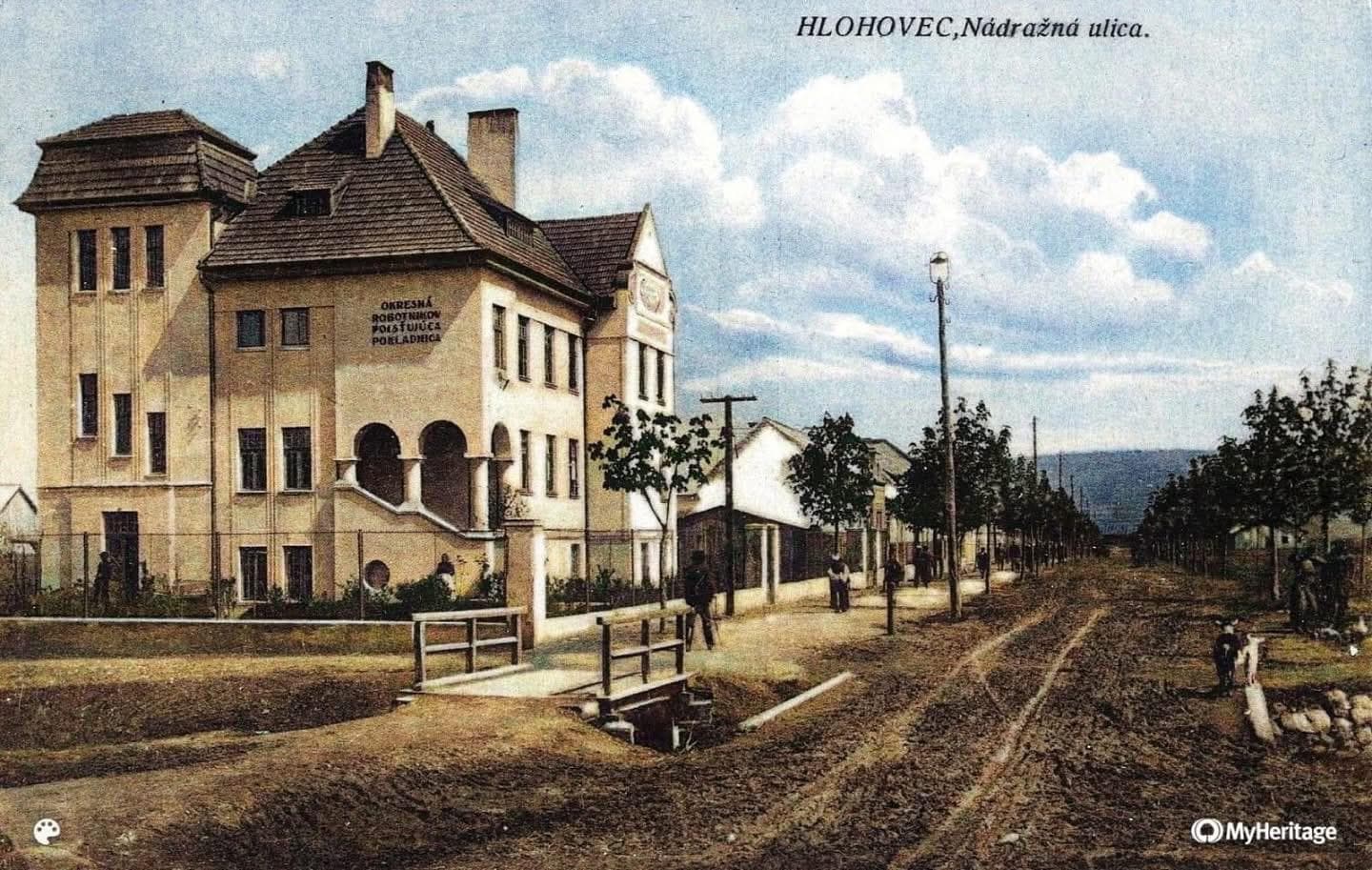
The monumentality of the building was enhanced by its placement at the corner of the street, where passersby could admire the house from multiple angles and with sufficient distance. The entrance staircase led directly to the staircase tower with slender windows topped by a pyramid roof of the French type. This connected the attic and garret with both floors and the basement. The answer to the question of why the building only had a semi-recessed basement and not a standard cellar space is explained by the first postcard of this building from 1921.
In close proximity ran a deep drainage ditch through which water from the so-called Šumperský brook constantly flowed, covered in this area by a small bridge. High groundwater simply did not allow for a standard cellar to be dug in this building.
The front gable of the building projecting in front of the saddle roof is in its upper part a reminiscence of rural buildings from South Bohemian villages of the Baroque period, which often used decorative elements on their gables such as volutes, spirals, scrolls, hearts, and finally dates of their construction. In this case too, the architect used a decorative element of a triangular gable topped with scrolls, placing between them a cartouche with a decorative symbolic ornament composed of grain ears, a hammer, two oppositely placed and tied sickles, between which a heart is placed. Above this ornamental section, the year of the building's construction was placed, with each digit separated by a linden leaf.
The side entrance to the basement from the northeast side was also originally designed, covered by a wooden carved dome-shaped canopy clad in sheet metal. The building was entered through a wide covered staircase on columns without an entrance hall, directly into the corridor and onto the wooden staircase leading to the second floor.
The functional use of the villa temporarily changed during World War II, when a branch of the Nazi secret police Gestapo (abbreviation from the German Geheime Staatspolizei) was briefly stationed here. From September 1944, it began carrying out its work in the city and surroundings — arresting, interrogating, and torturing persons involved in anti-state activities. This is also why the building became the target of several air strikes on Hlohovec.
The most massive attack took place before Easter on Green Thursday, March 29, 1945. Before the air raid sirens could even sound, a Soviet two-seat biplane Polikarpov R-5 appeared over Hlohovec in the moonlit night sky. The reconnaissance and bombing aircraft was difficult to detect by radar due to its low flight over the ground, in order to surprise the enemy. However, bombing was very inaccurate, and often missed its target, because the 10–20-kilogram bombs were dropped by hand based on visual targeting.
And so it happened that on this evening, the aircraft's bombs hit several houses on Nádražná Street, the monastery, the nearby inn of Emy Setteová, and the roof of the Evangelical church. But one of the main targets — the building where the Gestapo and Sicherheitsdienst were based — was not hit. In essence, the bombing of the house was also unnecessary, as the Nazis had abandoned it several days before the air raid.
After the war, the health insurance company returned to the building, and a health center was added. A new and perhaps the most beautiful chapter in the building's history took place between 1954–1964, when a maternity ward was established here. Hundreds of children from Hlohovec and the surrounding area were born here each year, and to this day, this building is the birthplace of many Hlohovec residents.
When it closed on December 31, 1964, the statistics of births in the Hlohovec maternity ward that year were 668 children, of which 160 newborns were from Hlohovec; the rest from the surrounding area.
Few people know that this villa is also the birthplace of several publicly known figures, the most famous of whom is probably singer, lyricist, and musician Richard Müller, son of actors Vlado Müller and Hlohovec-born Eliška née Kovačiková. He came into the world in this building on September 6, 1961. Richard's mother Eliška herself recounted in an interview that when she was in the maternity ward and her son Richard was about to be born, her husband Vlado and his colleague actress Magda Paveleková stood under the windows on the street shouting up: 'Eliška, hold on! Eliška, you have to endure it!'
When the maternity ward in this building and in Hlohovec as a whole ended its operation, a children's nursery was placed in its premises. The official reason for closure was inadequate conditions and insufficient equipment. However, according to historian Ferdinand Spál, the real reason behind the closure was the incompetence of the maternity ward's chief physician.
After the nursery, the villa on what was then Malinovského Street became a branch of the OPMP (District Enterprise of Local Industry), where glass was ground and small mirrors were glued into ladies' handbags, among other things. In the early 1990s, the District Police Department of Hlohovec was placed here, operating until December 31, 2010. From then on, the building began to deteriorate and the grounds became overgrown, so the once charming Skřivánek villa eventually resembled a haunted house.
The building was up for sale for several years until it was purchased by spouses Ľuboš and Simona Kubištoví from Dvorníky. Significant construction work and the owners' plans, implemented gradually from April 2025, give great hope for a further interesting life of this building, which history remembers above all as the place where storks landed with bundles of babies — and that this 'stork's nest' was built by the prominent Czech builder and designer Josef Skřivánek.
Complete Restoration
The building underwent a complete reconstruction, preserving the best of the original Secession architecture while adding modern technology and comfort.
Hidden Documents & Artifacts
During the reconstruction, forgotten documents, objects and messages from the past were discovered inside the building, revealing fascinating stories of this house.
A New Chapter Awaits You
All in Sissi is not just an event hall. It is a continuation of the story that began in 1921. A place where thousands of Hlohovec residents were born. And where your memories will now begin.
“A wedding in the hall where your parents were born. A celebration in spaces where history was written. An evening in a club where generations meet.”